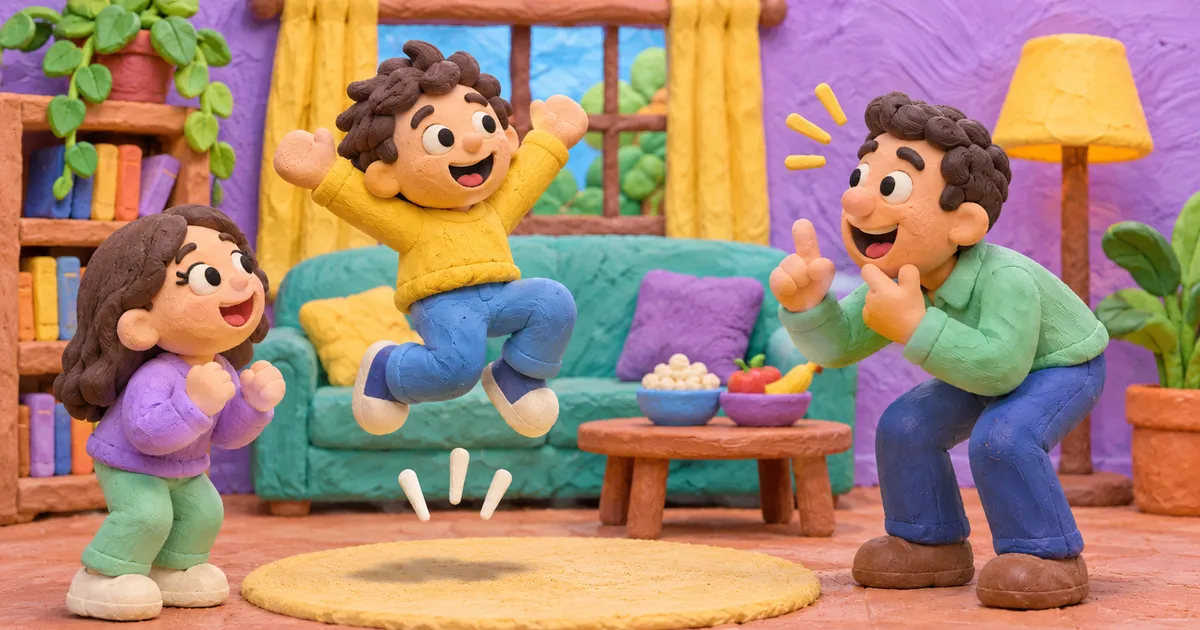
Each and Every for Kids: A Practical Guide
Each and Every for Kids: A Practical Guide starts with one clear rule: both words come before a singular countable noun, but each highlights one member at a time while every covers all members of a group. We say “each card” and “every card,” not “each cards” or “every cards.” Children also need singular agreement: “Each card has a number.” Use the examples and activities below to practise the choice and correct common errors.
What Children Need to Understand
Place three pencils on a table. Point to them one by one: “Each pencil is sharp.” Then sweep your hand across the group: “Every pencil is sharp.” The facts stay the same, but the focus changes.
Each and Every for Kids: A Practical Guide keeps this contrast concrete: each means “this one, then this one,” while every means “all the members, with none left out.” Children do not need a long definition before they see the pattern in action.
If your child speaks more than one language, compare the ideas rather than translating word for word. Another language may use one word for both meanings. Teach the complete English pattern: determiner, singular noun, and matching form.
How the Grammar Works
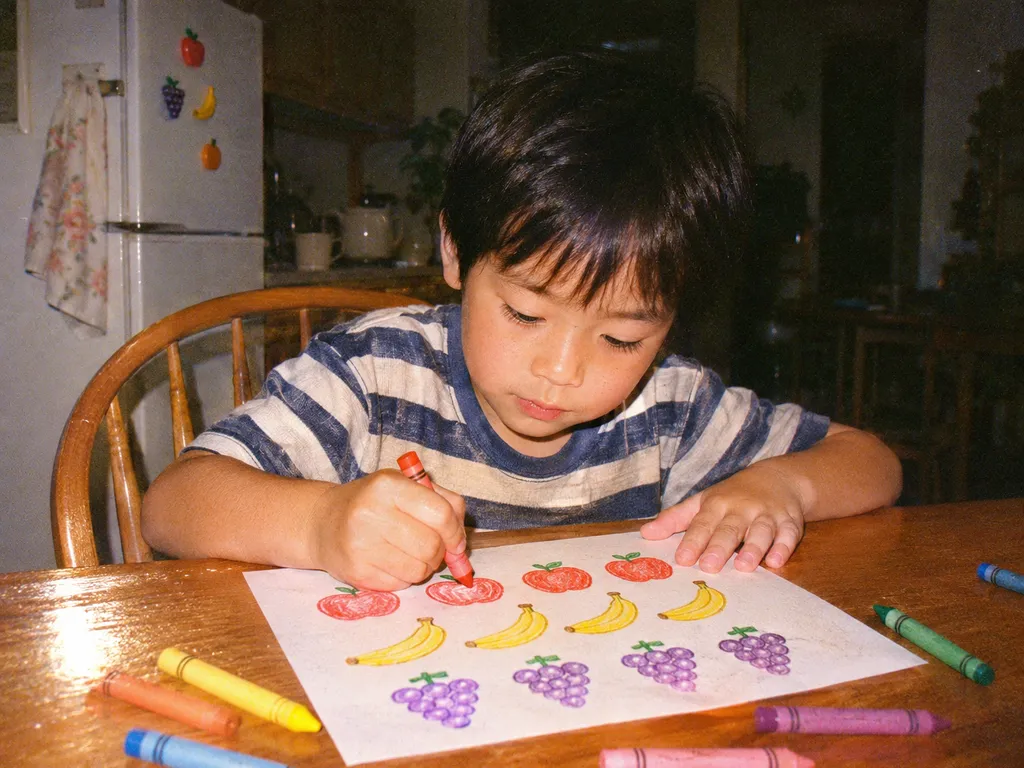
Use each before a singular countable noun: “each toy,” “each lesson,” and “each answer.” It can refer to two or more members. We might say, “Each shoe has a lace,” when looking at a pair.
Use every before a singular countable noun when considering all members of a group or a repeated series: “Every window is open” or “We read every evening.” It is most natural with three or more members, though English has familiar expressions such as “every side” when a thing has only two sides.
In Each and Every for Kids: A Practical Guide, the noun rule and agreement stay together. “Every player needs water” pairs a singular noun with needs. “Each of the players needs water” also uses needs because each, not players, controls the agreement.
Rules and Examples Side by Side
Choose each for separate members. Choose every for the whole group, a routine, or no exceptions.
A useful line in Each and Every for Kids: A Practical Guide is “one noun, one matching form.” The phrase “every games are” breaks both parts of the pattern. The correct sentence is “Every game is different.”
Each can also appear after a plural subject: “The children each have a pencil.” Here, children is the subject, so use the plural form have. Compare it with “Each child has a pencil,” where the subject is singular.
Common Mistakes and Quick Fixes
The most frequent error is adding a plural noun: “each stickers” or “every rooms.” Remove the plural ending and check the verb: “Each sticker is round” and “Every room has a window.” Keeping the noun and verb together makes correction easier.
Do not say “every of the cards.” Use “every one of the cards” or “each of the cards.” Also separate every one when it means every individual member. Everyone is one word when it means all the people: “Everyone is ready.”
Each and Every for Kids: A Practical Guide also separates every day from everyday. “We practise every day” means on each day. “An everyday activity” describes an ordinary activity. Ask whether the words tell us when something happens or describe a noun.
Practice Activities at Home and in Lessons
Use objects your child already knows: cards, cups, socks, pencils, or building blocks. Younger children can point and speak. Older learners can explain why the noun and verb are singular.
Choose the Correct Verb
Complete each sentence.
1. Each of the puzzles has/have six pieces.
2. Every child needs/need a turn.
3. Each and every chair is/are clean.
4. The players each carries/carry a bottle.
5. Every one of the doors opens/open outside.
Answers: 1. has; 2. needs; 3. is; 4. carry; 5. opens.
After checking the answers, ask your child to name the subject. This shows why “The players each carry” differs from “Each player carries.”
Change the Sentence
Rewrite each sentence with each or every.
1. Both gloves have a star.
2. All the pages are clean.
3. The four cups all have lids.
4. All children receive one folder apiece.
Possible answers: 1. Each glove has a star. 2. Every page is clean. 3. Each cup has a lid. 4. Each child receives a folder.
If two answers work, ask whether the focus is on separate members or the full group.
Say What the Speaker Means
Choose each, every, or each and every.
1. Look at the two shoes one at a time: ___ shoe is dry.
2. Name a regular routine: We read ___ evening.
3. Stress that there are no exceptions: ___ answer must be checked.
Suggested answers: 1. Each; 2. every; 3. each and every.
Across LearnLink lessons, our tutors can extend this practice through questions, object games, and short corrections. The aim is accurate use in speech as well as written exercises.
When a word has several meanings or pronunciations, Cambridge Dictionary is a useful check before turning it into child-friendly examples.
Frequently Asked Questions
Can Children Use Both Each and Every in the Same Sentence?
Yes. “Each and every” adds emphasis: “Each and every drawing has a label.” No drawing is an exception. The phrase is correct, but in most sentences either each or every states the meaning more simply.
Why Does Every Take a Singular Noun?
Every includes the whole group, but English presents the members one at a time in the grammar. Across LearnLink lessons, our tutors help children build confident, everyday English step by step. Teach the noun and verb as one frame: “Every child is,” “Every game has,” and “Every answer needs.”
Should We Say Each of Them Has or Each of Them Have?
Teach “Each of them has” in standard written English. The subject is each, so the verb is singular. The pattern changes when a plural subject comes first: “They each have a turn.” In that sentence, they is the subject, and the verb agrees with it.
What Is the Difference Between Everyone and Every One?
Everyone means all the people: “Everyone is inside.” Every one points to every individual member of a particular group, including things: “Every one of the plates is clean.” If your child can add an of phrase, such as “of these plates,” two words are usually needed.
How Can We Practise Each and Every Without a Worksheet?
Use Each and Every for Kids: A Practical Guide as a speaking routine. Place three objects on a table and ask your child to describe them first one by one, then as a complete group. Change the objects and repeat. Finish by asking why the child chose each or every.
If your child needs steady speaking practice, start small — choose a trial lesson.
Stay updated on our latest tips and resources by following us on Instagram LearnLink.